AI Services
AI Workflows & Automation
What actually changes in how work gets done? This is where AI takes on real tasks, not just assists.
Most teams have already used AI as a chat tool. Useful, but synchronous – you ask, it answers, you move on. Automation is where it changes shape. It becomes a specialist colleague that handles work overnight, while you’re on a call, or while you’re making coffee. The results are ready when you are. Not faster typing – a different shape of working day.


AI automations in practice
Different vocabularies, same shape. Approvals that live in inboxes. Escalations that go to the wrong person. Handovers built from scratch every time. Status reports that take a morning to produce and a minute to read.
Below are six families of workflow where we’ve repeatedly seen AI earn its keep. For each, we’ve set out what the manual version looks like, where AI quietly takes over, what stays human, and the outcome you should expect.
1. Approvals & Sign-offs
Examples: Job approvals, change requests, design sign-offs, purchase orders, asset approvals, client signoffs.
The workflow today – Someone emails an approval request. The approver opens the thread, hunts through attachments and previous emails for context, asks two clarifying questions, waits a day for replies, then makes a call. Or the request sits in an inbox for a week.
Where AI takes over – An AI agent reads the incoming request, pulls relevant context from your project files, past decisions and policies, and drafts a clean summary with the red flags called out. It routes to the right approver with a clear approve/reject/ask-a-question prompt – and for low-stakes items that meet your rules, it can clear them itself.
What stays human – The decision on anything material. The signature. The relationship work around tough calls.
Outcome – Approvals that took days take an hour. The audit trail builds itself. You stop being the bottleneck for low-value sign-offs.
2. Escalations & Issue Routing
Examples: Site issues, support tickets, safety incidents, complaints, change requests from the field.
The workflow today – A customer or site team flags a problem in an email or chat. Someone has to read it, classify it, find the right owner, gather context, and pass it along with enough information to act. Or it ends up in a generic inbox and ages.
Where AI takes over – Incoming issues are classified by type, severity and owner automatically. The agent attaches related history – this client’s tickets from the last six months, the relevant SOP, the contract terms – drafts a first response, and routes everything to the right team with a single click to acknowledge.
What stays human – The first real conversation with the affected party. Anything involving customers, money or risk.
Outcome – Faster response, fewer balls dropped, no “who owns this?” debates. Issues age less in inboxes and more get closed before anyone has to chase.
3. Coordination & Ordering
Examples: Material ordering, supplier coordination, stock management, logistics planning, scheduling between teams.
The workflow today – Procurement chases suppliers by email, finance chases finance, ops chases the warehouse. Information is scattered across spreadsheets, supplier portals and email threads. Someone holds it all in their head – and if they’re off sick, things stall.
Where AI takes over – An automation watches stock levels and the order book in real time, prepares the next batch of purchase orders, drafts the supplier emails, and flags any item where the lead time has slipped. It can chase confirmations and update your systems when they come back.
What stays human – Approving the orders. The supplier relationship. The judgement call when something genuinely unusual comes up.
Outcome – No more stock – outs from missed reorders. The “do we have enough?” question gets answered before anyone has to ask it.
4. Tracking & Leadership Visibility
Examples: Project progress, delivery tracking, performance monitoring, weekly status reports, board updates.
The workflow today – Every Monday someone spends a morning pulling numbers from four systems to build a status report. By Tuesday it’s already slightly out of date. By Friday, half the people it was sent to haven’t opened it.
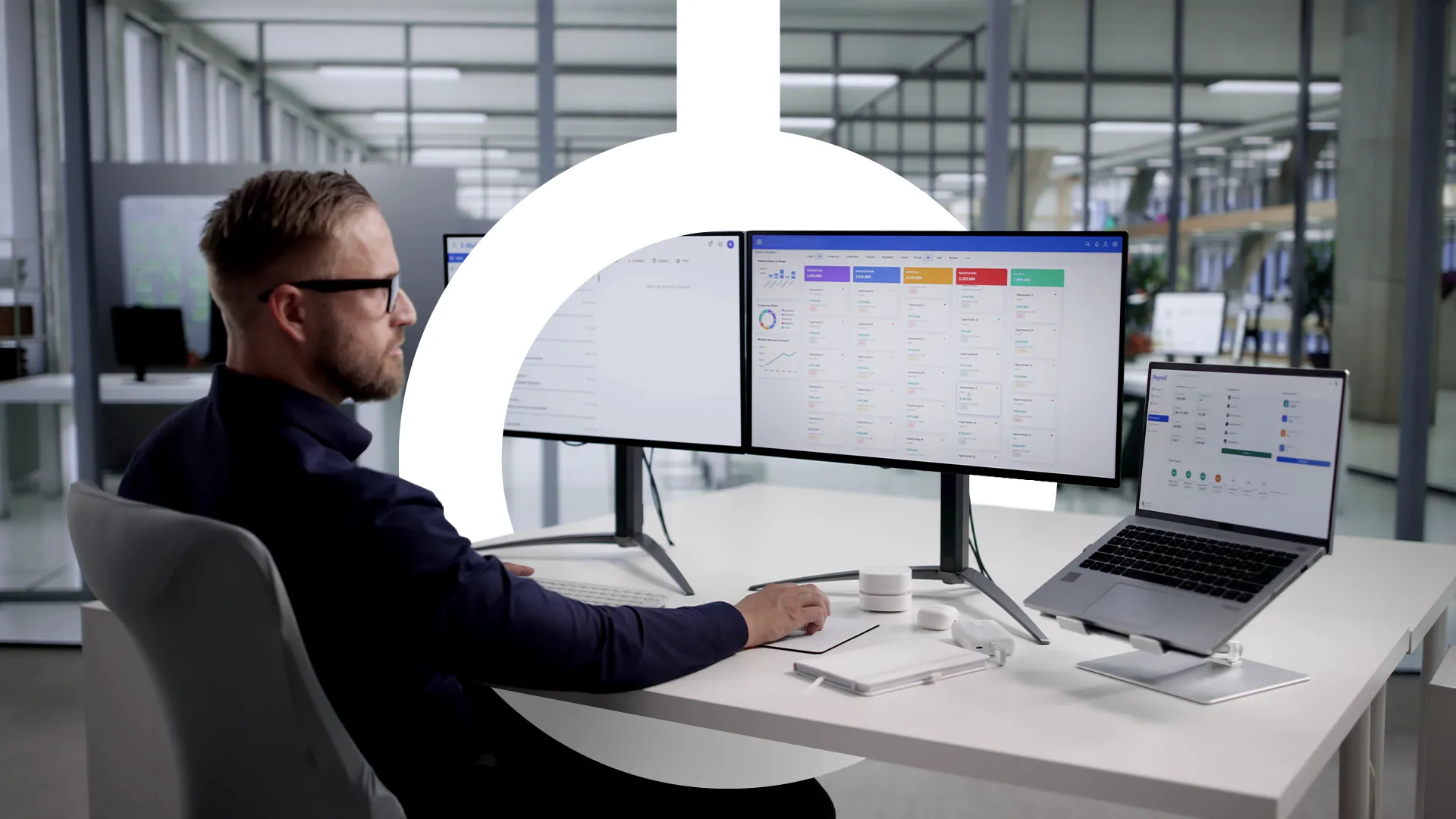
Where AI takes over – A live dashboard or daily digest pulls the same numbers and writes the commentary itself – what changed, what’s on track, what to worry about. Different versions for different audiences. Updates whenever the underlying data does.
What stays human – The judgement calls on what to do about the bad news. The hard conversations with clients or the board.
Outcome – Leadership gets faster, fresher visibility. Whoever was writing the report on a Monday morning gets their Monday morning back.
5. Compliance & Audit Trails
Examples: Certifications, regulatory reporting, safety checks, GDPR – style data requests, ISO and quality audits.
The workflow today – Someone keeps a spreadsheet of certifications, manually checks expiry dates, chases renewals, and pulls together the evidence pack at audit time. Some of it sits in shared drives, some in personal inboxes, some in someone’s memory.
Where AI takes over – A monitor watches your records, flags expiring certifications 30 days out, drafts renewal communications, and assembles audit packs on demand. Every approval, escalation and handover above gets its own clean audit trail automatically – because the AI is the one doing the routing.
What stays human – The actual compliance judgements. The sign – off. The conversations with auditors and regulators.
Outcome – Audits stop being a six – week scramble. Nothing expires that shouldn’t. You spend less time proving you did things and more time doing things.
6. Handovers & Documentation
Examples: Project handovers, sales-to-delivery handoffs, contractor sign – offs, end-of-project documentation, holiday cover.
The workflow today – The person leaving the project writes a handover doc from scratch the night before. The person picking up has questions for weeks. Half the institutional knowledge stays in someone’s inbox or head.
Where AI takes over – AI assembles a handover pack from your project files, meeting transcripts, email threads and CRM history. It produces a structured brief: who’s involved, what’s been agreed, what’s outstanding, what to watch out for. It keeps the pack up to date as the project moves.
What stays human – The “gotchas” only the outgoing person knows – captured in a 15 – minute call. The relationship introductions.
Outcome – Handovers go from “fingers crossed” to a real briefing. New people get up to speed in a day, not a fortnight.
Get In Touch
Do you recognise your workflows here? What’s your unique use case? Let us know.
How we work
 We sit with your team and map where the time actually goes.
We pick the workflow that will earn its keep first, and prove it before scaling.
We design the workflow end-to-end – not just the bit AI does.
We connect it into the tools you already use, with proper guardrails.
We watch it run, fix what breaks, and tune it over time.
Growth without the headcount
We help you find those non-linear opportunities, not just the small efficiency wins.
Our recent AI Automation projects
Beyond the internal workflows
The six workflows above are the ones we see in nearly every business we workshop. Alongside them, the same engine handles the customer – and team – facing work too – inbox triage and email drafting, meeting notes and follow – ups, internal knowledge bots that answer from your docs, marketing and content workflows, sales pipeline hygiene, structured data extraction from PDFs and invoices. Different shape, same idea: the boring, repeatable parts handled in the background; the judgement and the relationships left to your team.
The trap we help you avoid
Good automation looks at the whole flow, not just the bit AI does. Who acts on this output? What’s the second step? Where does this need a human in the loop, and where doesn’t it? We design with those questions in mind – so your automation actually leaves your team with their time back, not just rearranged.
Find something to automate this month
If you’re tired of your team doing work a machine could quietly handle, let’s talk. Book a free discovery call and we’ll pick one workflow we can take off your plate together.