
Solutions
Supporting You in Choosing & Implementing the Right Real Assets Management Software

Asset management takes different forms across industries. In some sectors, it focuses on equipment and operational assets. In capital-intensive investment environments, assets are structured around properties, infrastructure, funding vehicles and investor commitments.
This is the environment in which Blue Tea operates.
Organisations managing real assets require systems that reflect financial complexity, regulatory exposure and multi-entity structures. Performance data, capital deployment and investor reporting must remain structured, traceable and up to date.
Many organisations still operate across fragmented tools. Accounting platforms manage financials. Spreadsheets track drawdowns. Reporting is manually consolidated. Over time, duplication increases and oversight weakens.
Blue Tea designs real assets management software for organisations managing property portfolios, infrastructure assets, credit structures and alternative investments within regulated and capital-driven environments.

Table of Contents
1. Real estate portfolio oversight and portfolio management
2. Supporting real estate strategy with structured data
3. Fixed asset management and financial control
4. Property management visibility and rent increases tracking
5. How asset management software works in practice
6. How real asset management systems create measurable value
7. Compliance, audit and regulatory alignment
8. Off-the-shelf real assets management software
9. Low-code platforms and system integration
10. When fully custom real asset management software makes sense
11. Choosing the right approach
12. Frequently asked questions
Real Estate Portfolio Oversight & Portfolio Management
While real assets management applies across multiple sectors, real estate remains one of the most structured and operationally complex environments. The examples below illustrate how structured systems support portfolio oversight in that context.
Portfolio management requires structured oversight across properties, entities and jurisdictions.
A well-designed real estate portfolio management system allows organisations to:
 track asset performance and valuation changes monitor capital expenditure and funding milestones manage lease structures and rent increases where applicable maintain structured historical data for reporting and audit
By consolidating property data, financial flows and operational inputs, real assets management software provides a holistic view of performance and risk across the portfolio.
Supporting Real Estate Strategy with Structured Data
Real estate strategy depends on reliable, structured information.
Investment decisions require accurate performance tracking, cost visibility and forward-looking analysis. When systems are fragmented, strategic decisions rely on manually consolidated reports and incomplete data.
Asset management software supports real estate strategy by keeping performance data, financing arrangements and operational metrics aligned and accessible. This strengthens board-level decision-making and long-term capital planning.
Fixed Asset Management & Financial Control
Fixed asset tracking plays a critical role in financial governance across complex portfolios.
A structured fixed asset management framework allows organisations to:
maintain detailed asset registers track depreciation and capital expenditure monitor asset lifecycle events support financial reporting and auditBy integrating accounting systems with operational and portfolio data, asset management software supports accurate recording and financial reporting of fixed assets.
Property Management Visibility & Rent Increases Tracking
Asset oversight often intersects with day-to-day property management processes.
Real assets management software can support property management visibility by:
tracking lease agreements and critical dates monitoring rent increases and revenue performance consolidating tenant-related financial data aligning operational inputs with portfolio reportingThis keeps income streams, occupancy levels and contractual changes visible within a unified system rather than scattered across spreadsheets and documents.
How Asset Management Software Works in Practice
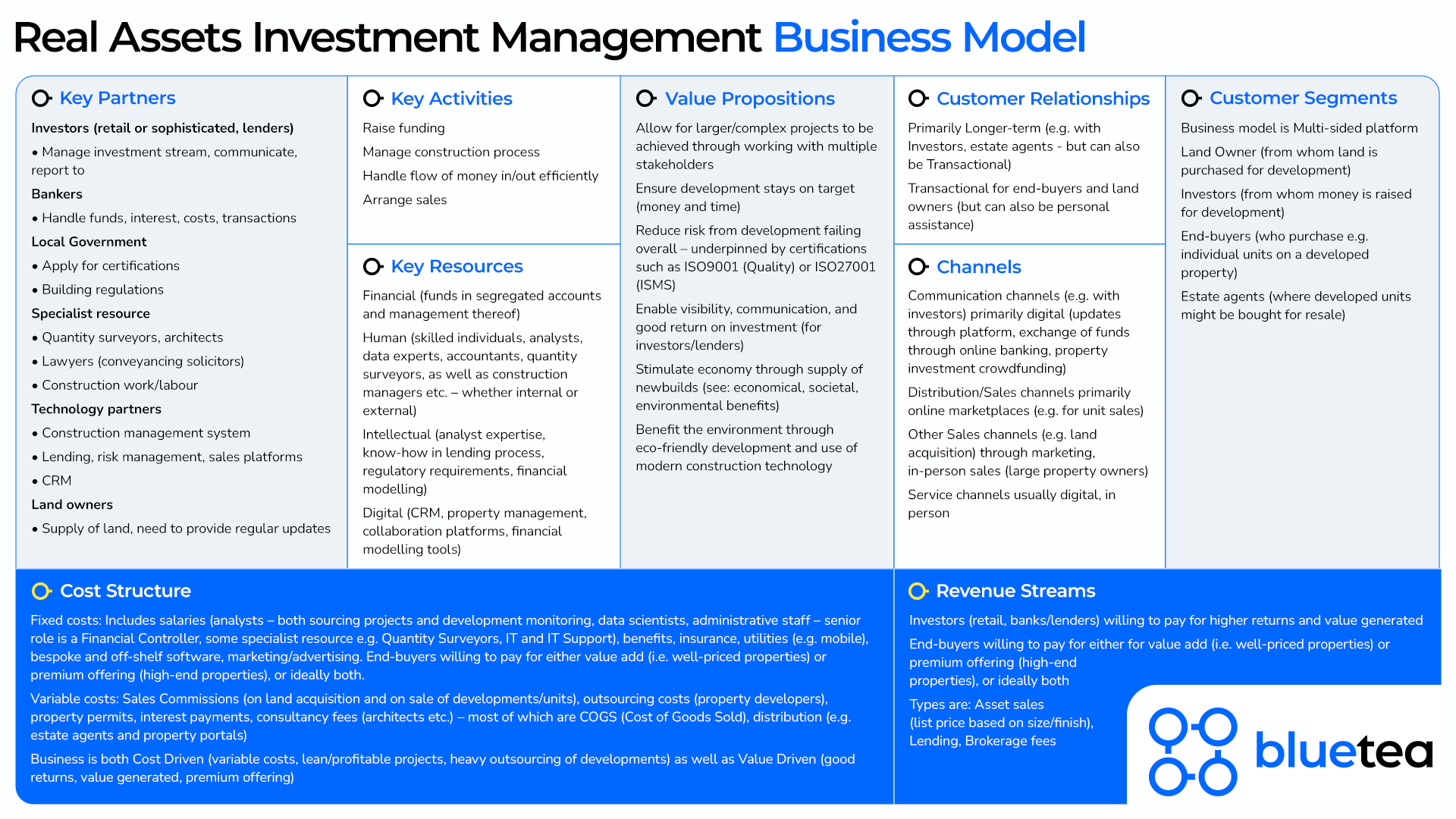
Real assets management software is rarely a single standalone product.
In most organisations, it sits within an existing technology landscape. Rather than replacing every system, it connects financial data, portfolio records and reporting workflows into a structured layer of oversight.
The purpose is to make data easier to review, reporting more consistent and accountability clearer across assets and transactions.
With the right structure in place, duplication decreases and information remains up to date without increasing operational complexity.
How Real Asset Management Systems Create Measurable Value
Real assets management software brings together existing systems, integrations and custom development tailored to how an organisation operates.
Here are some of the most common ways these systems deliver value.
Keeping Costs, Funding & Transactions Visible
Structured monitoring allows organisations to track capital deployment, transactions, expenditure and funding milestones within a governed framework. Instead of relying on static reports, management teams gain continuous visibility into performance and costs.
Strengthening Investor Reporting & Audit Readiness
Investor reporting must be accurate, timely and defensible. Asset management software centralises reporting data, maintains structured audit trails and preserves historical versions. This reduces preparation time during due diligence and strengthens investor confidence.
Reducing Operational Risk through Structured Processes
Disconnected workflows increase the likelihood of error. A unified system introduces structured approvals, role-based access controls and secure data handling. This improves governance and reduces exposure to compliance breaches.
Monitoring & Risk Identification
Dashboards, performance indicators and structured monitoring tools support early identification of underperformance. RAG-style status tracking and automated variance detection help organisations assess risk before issues escalate.
Compliance, Audit & Regulatory Alignment
Managing real assets involves regulatory, contractual and fiduciary responsibilities.
Asset management software supports compliance by:
maintaining transparent audit trails recording system history and user actions controlling access permissions supporting structured financial reportingFor regulated organisations, alignment with recognised standards strengthens credibility and operational resilience. Compliance should not be a defensive exercise. When governance is embedded within the system architecture, it becomes a source of control and stability.
Off-the-Shelf Real Assets Management Software
Off-the-shelf asset management software can provide a practical starting point.
These platforms typically support property management, portfolio management and reporting functionality. They work well where processes are standard and operational complexity is moderate. Platforms such as ManagePlaces illustrate how project delivery, cost monitoring and team collaboration can be centralised within a structured environment.
Organisations still need to assess whether the system aligns with their specific structure, reporting requirements and integration needs.
Low-Code Platforms & System Integration
Low-code platforms are often used to extend existing systems or connect multiple tools. In some cases, organisations choose established CRM environments such as Salesforce or similar platforms for strategic reasons, including familiarity, investor confidence or future acquisition considerations.
They allow organisations to:
streamline workflows integrate accounting and reporting platforms build internal dashboards automate specific operational processesWhen implemented carefully, low-code solutions provide flexibility and controlled extension without requiring full custom development.
When Fully Custom Real Asset Management Software Makes Sense
In some organisations, complexity is structural rather than incidental.
Where capital structures involve staged funding, multiple investors and milestone-based drawdowns, spreadsheets quickly become unreliable. Version control is lost. Historical data becomes difficult to audit.
A fully custom real asset management system replaces fragmented processes with governed workflows built around funding logic, reporting obligations and operational accountability. Funding approvals, financial monitoring, investor reporting and transaction tracking are structured within a controlled environment.
Custom systems also allow operational and financial processes to be structured around how capital is actually deployed, monitored and reported. This may include:
complex portfolio management structures multi-entity reporting requirements specialised transaction workflows advanced performance analysisIn more advanced implementations, structured data supports intelligent monitoring and risk assessment. Automated analysis can highlight anomalies, flag performance issues and support informed decision-making without replacing professional judgement.
A custom solution evolves alongside the organisation, adapting as portfolios grow, strategies shift and regulatory requirements deepen.
Example of a custom real assets management platform
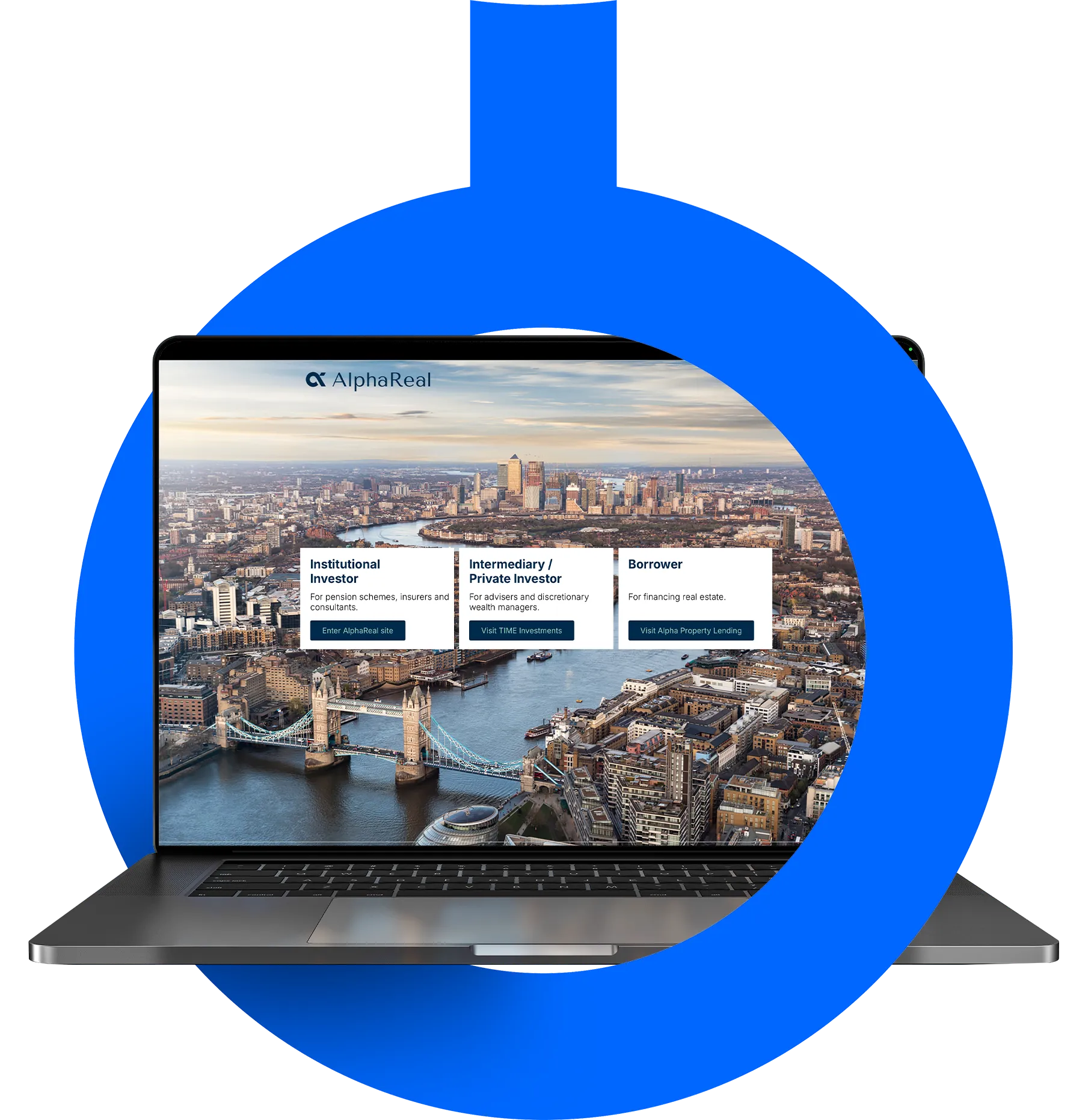
For Alpha Real Capital, a UK-based real assets investment manager, Blue Tea designed and delivered a fully custom portfolio risk and reporting platform to replace fragmented Word reports and Excel-based drawdown tracking.
The system introduced structured workflows for quantity surveyors, integrated cash flow uploads and drawdown requests, implemented RAG-based project monitoring and created governed audit trails for every change. Portfolio overviews, construction programme tracking and automated report generation reduced reporting time while increasing transparency and financial control.
By consolidating project data, funding logic and investor reporting within a single controlled environment, Alpha Real Capital strengthened risk oversight, improved QS productivity and reduced operational exposure across multiple live developments.
Choosing the Right Approach
There is no single best solution for real assets management.
Many organisations adopt a hybrid model, combining off-the-shelf software, low-code integrations and custom components where they deliver the most value.
The right balance depends on portfolio complexity, regulatory exposure, existing systems, reporting requirements and long-term strategy.
Our role is to help organisations design real assets management software that strengthens control, improves visibility and supports investor reporting across the full lifecycle of real assets.
Frequently Asked Questions
What are examples of real assets?
Real assets typically include commercial and residential property, infrastructure assets, renewable energy projects, logistics facilities and other income-generating physical assets. These assets are often held within investment vehicles, funds or multi-entity structures and require coordinated financial and operational oversight.
What are examples of real assets?
Real assets typically include commercial and residential property, infrastructure assets, renewable energy projects, logistics facilities and other income-generating physical assets. These assets are often held within investment vehicles, funds or multi-entity structures and require coordinated financial and operational oversight.
What are the main types of real estate investments?
The most common real estate investment categories include:
Core and income-generating properties Value-add or repositioning assets Development projects Opportunistic or higher-risk investmentsEach type involves different capital structures, lease management requirements and reporting obligations, which structured asset management systems help oversee.
How does real assets management software support compliance and reporting?
Modern asset management software centralises portfolio data, maintains audit trails and supports alignment with accounting standards such as IFRS and GAAP. Automated reporting and KPI dashboards improve transparency while preserving version history for audit and investor reporting purposes.
Can real assets management software integrate with existing systems?
Yes. Integration flexibility is critical. Effective platforms connect with ERP, CRM and accounting systems to avoid data silos and maintain accurate, up-to-date financial and portfolio data. This ensures seamless operations without disrupting established processes.

Ready to Implement the Right Real Asset Management Software for You?
Collaborate with Blue Tea to develop bespoke solutions that fit your workflows, evolve with your growth and deliver measurable impact.